LynchVax
A Cancer Prevention Vaccine Programme.

The LynchVax program, funded by Cancer Research UK (CRUK) and Moderna, has brought together a multidisciplinary team of UK scientists, clinicians and people affected by Lynch syndrome who have developed and are testing a vaccine that may help prevent cancer in individuals with this genetic condition.
Cancer vaccines continue to show promise in helping to create a world where people can live longer, better lives, free from the fear of cancer.
CRUK Chief Executive, Michelle Mitchell
Our Research
Lynch syndrome (LS) affects 175,000 people in the UK, and 75 out of every 100 people with LS will develop some kind of cancer during their lifetime. Some people will get more than one kind of cancer.
These cancers happen because people with LS are born with a variant in a gene that makes it harder for their bodies to repair mistakes when DNA copies itself – a process happening in cells all the time. These mistakes, or mutations, can build up, making the cells containing them more likely to transform into cancerous cells. The same mutations though, also make them more visible to the immune system and with enough stimulation, the immune system can attack these abnormal cells and stop cancer from forming.
We have identified several mutations occurring in the most common cancers associated with LS such as colon (bowel), endometrial (womb) and oesophageal (gullet) cancer. Our research shows that these mutations appear very early in cancer development in people with LS, making them a good target for a preventative approach.
We are testing if targeting these mutations with a vaccine, will increase the elimination of mutated cells, helping to reduce the risk of cancer transformation in people with LS.
By using mRNA vaccine technology to train the immune system to recognise early cancer changes, or what we call ‘pre-cancer,’ we hope to reduce cancer risk and ultimately improve the lives of people with this inherited condition.
LynchVax Principal Investigator, Prof David Church
Our Clinical Trial
In June 2026 we received authorisation from the MHRA to run a phase 1 and 2 clinical trial to test the safety and tolerability of an mRNA vaccine we have developed in collaboration with Moderna.
The trial, known as 'INTERCEPT-Lynch', was designed in close collaboration with people with Lynch Syndrome, to ensure that the trial requirements would not place an excessive burden on patients.
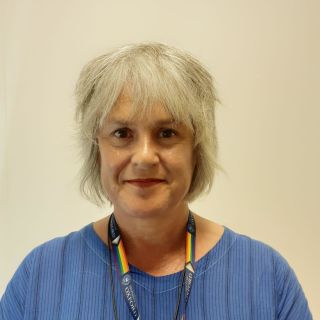
It’s been a privilege to contribute to the design of this trial as part of the INTERCEPT-Lynch Public and Patient Involvement Group. Drawing on our own experiences as people living with Lynch syndrome, including undergoing colonoscopies, has helped ensure the study is both participant-focused and shaped by real-world experience. Despite the availability of risk-reducing interventions, both the reality and fear of cancer remain significant for people with Lynch syndrome. This research has the potential to change that, offering real hope for a future with less fear of cancer.
INTERCEPT-Lynch Public and Patient Involvement Group member, Helen White
To learn more about the INTERCEPT Lynch vaccine trial, visit the Oncology Clinical Trials Office website.

Meet the team
-
David Church
Project Lead
-
Sara Danielli
Senior Research Project Manager
-
Robert Watson
Fellow & Director of Graduate Entry Medicine Clinical Lecturer
-
Ellie Barnes
Professor of Hepatology and Experimental Medicine
-
Bobby Bojovic
Multi-omics Scientist
-
Laila Latifi
DPhil Student in Cancer Science
-
Anthony Brown
Research Assistant
-
Paolo Piazza
Head of Technology Platforms
-
Ryan Byrne
Senior Bioinfomatician
-

Luciana Gneo
Postdoctoral Researcher
-
Eleni Adamopoulou
Group Leader
-
Orthi Onupom
Research Assistant
-
Iliyana Kaneva
Senior Research Scientist
-
Steve Thorn
Postdoctoral Bioinformatician
-
Alex Petukhova-Greenstein
DPhil student in Cancer Science
-
Qian Yang
Bioinformatician
-
Marcos Garcia-Lacarte
Bioinformatician
-
Waseem Qureshi
Research Data Integration and Software Developer
-
Catriona Gilmour Hamilton
Patient and Public Involvement Manager
-
Helen White
PPI Collaborator
-
Aleksandra Dzhoneva
Postdoctoral Scientist









Media coverage
Have a question? Take a look at our FAQ's page.
Our Objectives
Identify Targets

Maximise Efficacy

Remove Barriers
